
Forecast for 2026: How it Helps Your Real Estate Investment

Is your portfolio ready for the new year? Colliers’ 2026 real estate forecast shows that the Philippine property market is entering a normal cyclical phase. While the days of broad-based surges have evolved, 2026 is an opportunity-rich year for the data-driven investor.
Understanding these trends is crucial to knowing where to invest, when to act, and which assets offer the strongest potential for value appreciation in the coming year.
Top 10 Property Investment Forecasts for 2026 (Based on Colliers Philippines)
Sector-specific trends will shape real estate returns in 2026. Some segments are stabilizing, while others offer targeted growth. Whether you’re considering a real estate investment in the Philippines or planning to expand an existing portfolio, these insights help you navigate pricing, demand, and location advantages.
1. Metro Manila condominiums will remain a buyer’s market
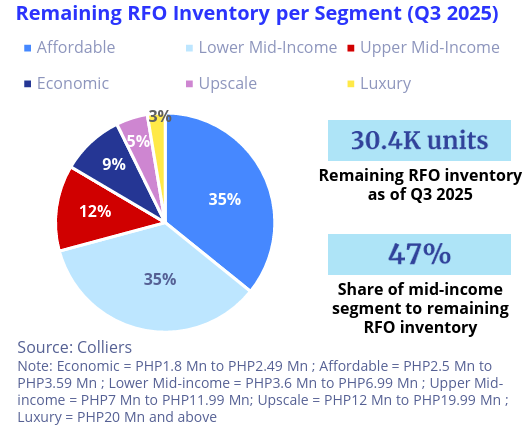
Colliers found that unsold RFO units in Metro Manila reached 30,400 as of Q3 2025, keeping the market favorable for buyers. This surplus gives investors stronger negotiating leverage, access to promos, and more flexible payment schemes. Mid-income units make up 47% of the remaining supply, offering value-buying opportunities if you want to enter the market.
If you want to achieve modern living in strategic locations, properties like The Seasons Residences in BGC offer ready-for-occupancy units with flexible payment options. Investing in such developments lets you benefit from current buyer-friendly conditions while securing high-quality, conveniently located assets for long-term value appreciation.
2. Slower condo completions will help normalize prices post-correction
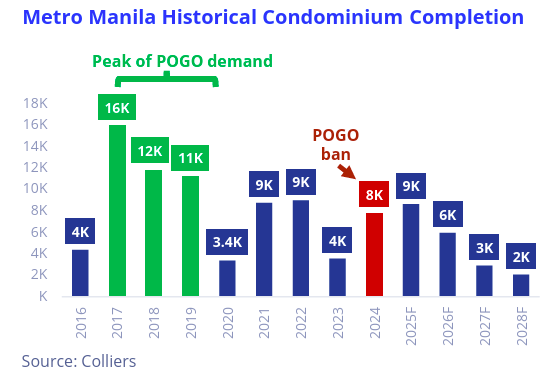
Colliers projects a sharp slowdown in condominium completions beyond 2025, with average annual deliveries expected at just 3,600 units from 2026 to 2028. This number is significantly lower than the 13,000-unit yearly average recorded from 2017 to 2019, when developers rushed projects to meet strong demand from Philippine Offshore Gaming Operators (POGOs).
With fewer new units entering the market, price pressures are expected to ease, helping prevent further erosion after the recent correction phase. If you’re a long-term buyer, this market adjustment signals a strategic entry window to buy at favorable prices and hold as supply gradually returns to normal.
Federal Land developments in established Metro Manila CBDs offer added resilience, combining reduced future competition with prime locations that support sustained value over time.
3. Fringe and masterplanned locations will outperform prime CBDs
Soaring prices and limited developable land in prime CBDs are pushing both developers and investors toward Metro Manila’s fringe areas. Masterplanned projects along the C5 Corridor and the Katipunan area are seeing strong demand, with take-up rates ranging from 40% to 100% depending on the development and price segment.
Condominium units in these fringe locations offer better entry points and higher potential appreciation compared with overcrowded CBDs. For example, mid- to high-rise developments priced from ₱10 million to ₱63 million along C5 have attracted buyers steadily, while Katipunan-area projects priced between ₱2 million and ₱11 million enjoy an 85% average take-up.
To achieve stable growth, consider exploring offerings from trusted developers like Federal Land for convenient urban fringe living that balances accessibility, amenities, and value appreciation.
4. Prime CBDs will drive a measured office rental recovery
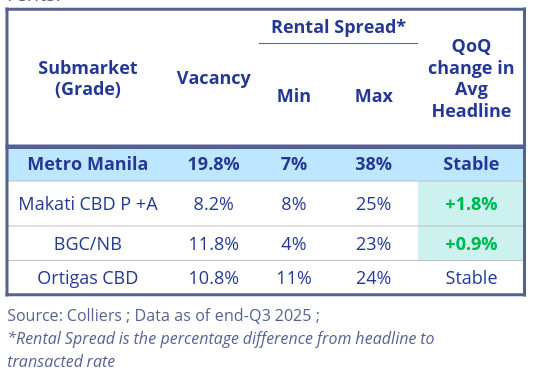
Colliers expects average office lease rates to remain largely stable through 2026. However, the recovery will not unfold evenly across Metro Manila. Submarkets with below-average vacancy—specifically Makati CBD, Fort Bonifacio, and Ortigas Center—are positioned to post marginal rent increases ahead of the broader market.
This uneven rebound reinforces a key reality for investors: location matters more than cycle timing. Offices in established CBDs benefit from tighter supply, sustained corporate demand, and stronger tenant quality, making them more resilient during normalization phases.
Federal Land’s developments within and near these core districts align well with this trend, offering proximity to employment hubs that continue to support both office values and nearby residential demand.
5. Outsourcing and traditional firms will anchor office demand
Colliers projects continued improvement in net office take-up in 2026, supported by fewer lease surrenders and a steady pipeline of pre-leasing activity. Demand remains anchored by outsourcing firms alongside traditional sectors such as legal services, engineering, and government-related offices—groups that prioritize stability, compliance, and long-term occupancy.
This trend underscores the enduring value of well-located, Grade A office assets that meet modern tenant requirements for efficiency, accessibility, and building quality. Developments situated near central business districts and mixed-use estates—where Federal Land maintains a strong presence—benefit from consistent tenant demand and more predictable income performance.
6. Metro Manila retail vacancy set to return to pre-pandemic levels
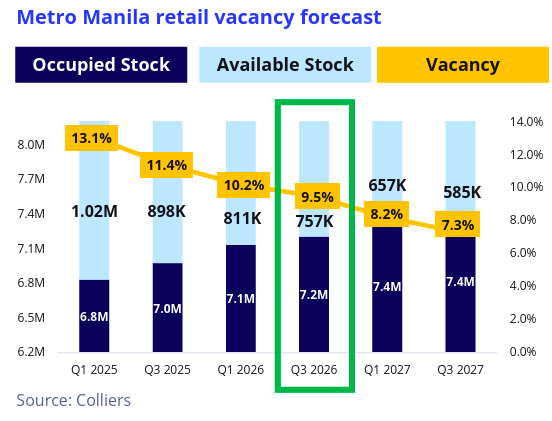
Retail continues to stand out as one of the most resilient property sectors. As of Q3 2025, Metro Manila retail vacancy improved to 11.4%, down from 13.1% earlier in the year, its lowest level since early 2020. Colliers expects this figure to revert to sub-10% levels by the end of 2026, aligning with pre-pandemic norms.
This recovery reflects steady foot traffic, stronger tenant retention, and the entry of foreign brands, which are projected to account for around 75% of new retail supply. Retail assets integrated into mixed-use developments offer durable demand drivers and more stable long-term returns.
7. Retail expansion to key cities beyond Metro Manila
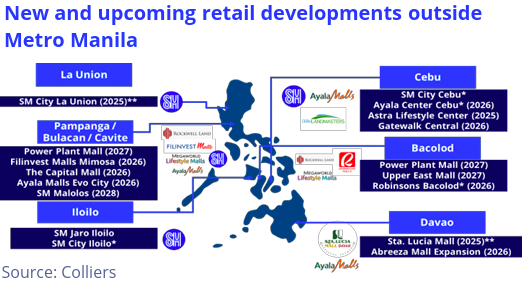
Colliers notes a growing trend of mall developers moving into suburban and regional markets. By 2026 to 2028, major players like Rockwell, SM, and Ayala Malls plan openings and renovations in cities such as Cebu, Davao, Iloilo, Bacolod, and Angeles City.
This shift creates opportunities for investors like you to explore mixed-use developments outside Metro Manila, where residential and retail components complement each other. Federal Land’s Seasons Residences BGC and other regional projects prove how strategic location selection can align with retail growth and long-term asset value.
8. Mixed-use and regional developments gain momentum
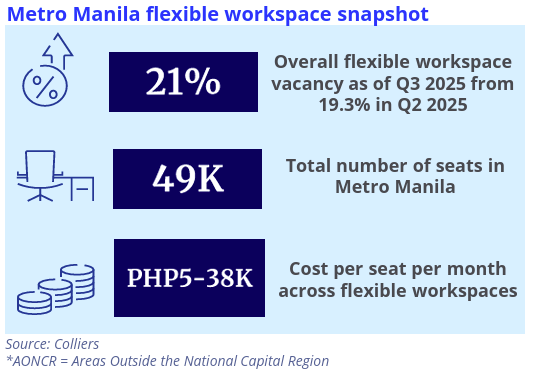
Colliers highlights the rise of flexible workspaces and mixed-use projects as a strategic response to market uncertainty. Ready-to-use offices now support business continuity, while regional expansion taps emerging growth markets outside Metro Manila, including Cebu, Pampanga, Iloilo, Bacolod, and Davao.
As an investor, you can benefit from diversified income streams that combine residential, office, and retail components. Federal Land’s Marco Polo Residences in Cebu exemplifies this trend, offering modern living paired with commercial convenience. It helps buyers and investors capture both urban and regional growth opportunities.
9. Extended land lease law to accelerate industrial and manufacturing growth
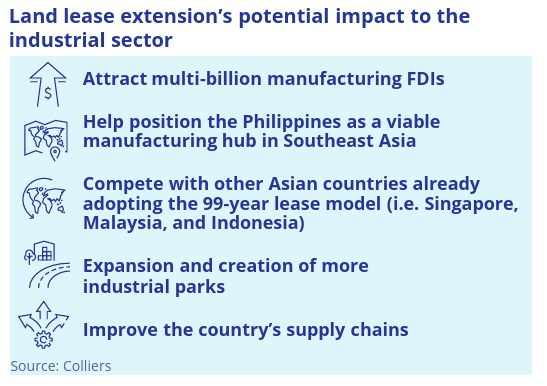
The passage of Republic Act No. 12252 in August 2025 marks a turning point for the Philippines’ industrial sector. Extending foreign land lease terms to as long as 99 years improves investment security. It also places the country on a more equal footing with regional peers such as Singapore, Malaysia, and Indonesia.
Colliers notes that this policy shift can attract large-scale manufacturing foreign direct investments, strengthen supply chains, and encourage the expansion of industrial parks, particularly in Central Luzon and the Cavite-Laguna-Batangas (CALABA) corridor. Longer lease stability translates to stronger asset viability across logistics, manufacturing, and industrial estate developments.
10. Metro Manila hotel supply to expand amid recovery
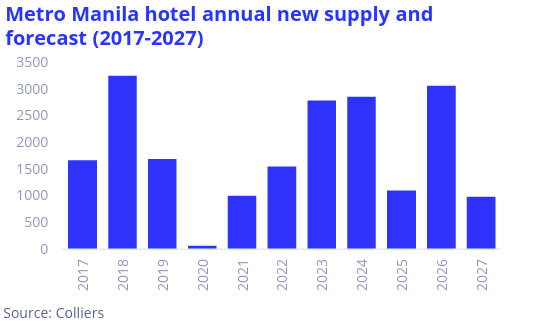
Colliers projects about 3,100 new hotel rooms to open in Metro Manila in 2026, marking the highest annual delivery since 2018. The Manila Bay Area and Makati CBD will host over two-thirds of these openings, with foreign brands accounting for more than half.
This influx highlights opportunities if you’re looking at hospitality-linked developments and mixed-use properties. Living near these dynamic hubs also benefits residents: Federal Land’s Grand Hyatt Manila Residences and other Makati properties provide ready access to thriving hotel, retail, and dining scenes.
Navigate Tomorrow’s Real Estate Market
Collier’s 2026 report presents selective opportunities across the Philippine property market. Aligning your strategies with sector-specific and location-specific real estate market forecast insights can help you manage risk more effectively and position yourself for long-term gains.
From condominiums in Metro Manila to mixed-use projects in emerging regional hubs, understanding supply, demand, and regulatory shifts is crucial.
If you want to capitalize on these trends, Federal Land, a trusted real estate developer in the Philippines, offers RFO and pre-selling properties in prime locations such as Metro Manila, Cavite, Laguna, and Cebu. Explore projects like The Seasons Residences or Marco Polo Residences to secure modern living spaces that also serve as strategic investments.
Contact Federal Land today to learn more and start planning your real estate investments.
FAQs
1. What is a real estate forecast, and why does it matter?
A real estate forecast predicts trends in property prices, supply, and demand. Investors use it to anticipate market cycles, make informed purchase decisions, and minimize risks.
2. How will 2026 affect condo investments in Metro Manila?
Metro Manila condos are projected to remain a buyer’s market with high RFO inventory. You can leverage promotions, flexible payment schemes, and mid-income unit availability for value buying.
3. Which sectors are expected to perform best in 2026?
Retail and industrial sectors are showing resilient demand, while office recovery is selective. Mixed-use developments offer diversified income streams for more stable returns.
4. How does location impact office market recovery?
Submarkets like Makati CBD, Fort Bonifacio, and Ortigas Center are expected to see marginal rent growth. Overall recovery varies, making location-driven office investments critical.
5. Why should I consider mixed-use projects for investment?
Mixed-use developments combine residential, office, retail, and hospitality spaces, mitigating risks from single-asset investments. They provide multiple income streams and long-term resilience for investors.

Head of Corporate Communications
Gizelle is a marketing and communications professional with extensive experience in the real estate industry, specializing in brand strategy, marketing communications, corporate communications, and integrated campaigns. She has built her career working across brand development, strategic communications, public relations, systems development, and marketing, with experience spanning both corporate and consumer-facing initiatives.
At Federal Land, Gizelle leads the Corporate Communications Department handling the company’s diverse portfolio, helping shape the narratives and experiences behind some of its most notable developments.
linkedinINQUIRE NOW
Let us know what you are looking for. Get updated portfolio delivered straight to your inbox.